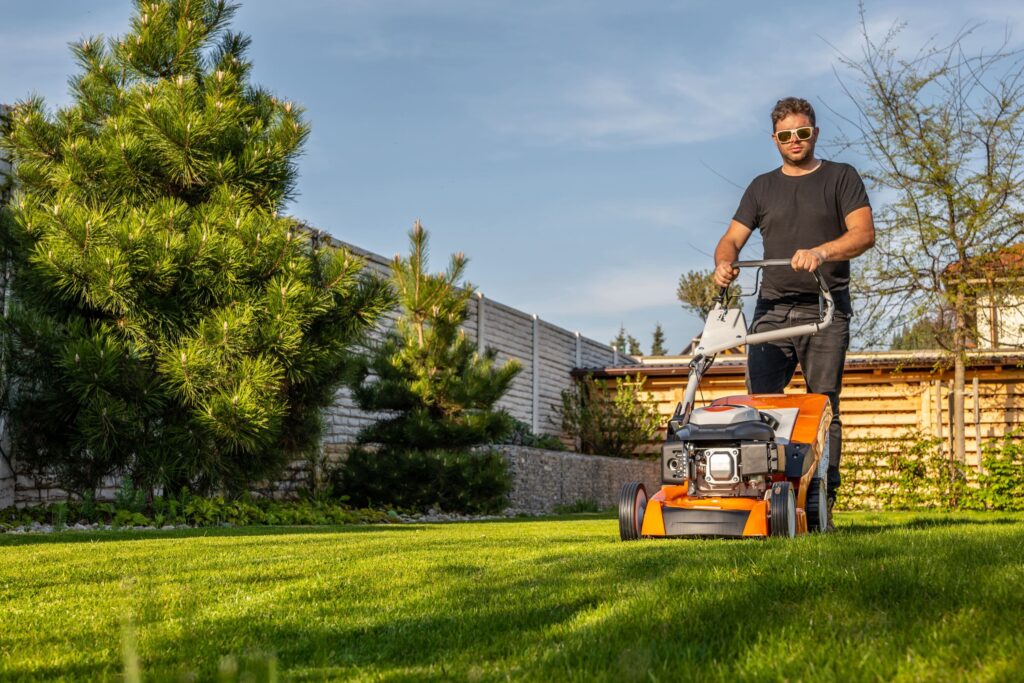

For most homeowners, “garden maintenance” conjures up a Saturday morning with a mower. Cut the grass, maybe pull a weed or two, and you’re finished. But that’s equivalent to housekeeping – like sweeping the floor and dusting down surfaces while ignoring the general health of your living space. To look after a garden properly, you need to look after the soil it’s based on, the structure of the space, the water that keeps it alive, and the biology you’re nurturing – not just the length of the turf.
Healthy Soil Isn’t A Given
The roots of the grass and plants you see are only part of the story. Soil compaction is a common problem in most domestic gardens and every time you mow you make it worse. Compacted soil prevents oxygen and water reaching the root system. Your plants are stressed even when they don’t show it.
Aeration breaks up the compaction and introduces air back in the soil. With pH soil testing and targeted fertilization, you can give your plants what they actually need, not what the marketing department of a lawn feed company says they need. Different species have other requirements, and gardens that never quite flourish often have this in common.
Mulching is the lowest effort, best garden care task there is. A good organic mulch spread over your garden beds keeps the moisture in, keeps the soil temperature stable, and keeps the weeds out – the easiest, most effective ammunition in your total care arsenal.
Pruning Is A Skill,Not Just A Task
Reducing the size of something doesn’t mean it will be healthier. This is a fact of life that all gardeners have come to terms with, especially if they have a particular plant that’s grown unwieldy. Pruning it back isn’t simply about taking anything and everything off the plant – precision is crucial if you want to limit potential damage and give it the best chance of a robust recovery. It’s also a question of what you want to achieve when you take the secateurs to hand.
Hardscaping Needs As Much Attention As The Plants
The hard part of a garden – decks, paths, retaining walls, pergolas – it’s what everything else is seen in relation to. The part that shapes the view. The part that turns first impressions into lasting ones. Even the most beautiful plants won’t make up for a greyed, cracked deck. It’s maintenance, sure, but it’s also the backbone of the space.
And timber’s not easy. You’ve made an investment in it as a medium to build with; now you need to protect that investment, because timber of any sort is susceptible. Untreated timber will last for a while, but it will get weathered. Moisture, particularly, causes it to swell and shrink, and that warps and cracks it. Then there’s UV, which grays and weakens the surface, along with pests, which chew and nest. Routine cleaning and sealing of timber is not an added extra; it’s essential for maintaining the aesthetic, and therefore the value you aimed for when you installed it in your garden.
Using a professional-grade deck seal protects the wood from the outside in, extending its life and keeping it looking the way it was meant to. When choosing someone to carry out the work, look for a service that uses products resistant to dirt, water, mould, mildew, and UV — and that guarantees a finish that won’t crack, blister, or peel. If you’re in Australia, it’s worth exploring local specialists such as Deck Seal, or finding a similarly qualified professional in your area.
Weed and Pest Control Goes Deeper Than It Looks
Using a mower to cut weeds only trims them on the surface and leaves the root systems intact. As a result, most weeds grow back even stronger within a week. True weed suppression involves targeting the conditions that allow germination to occur in the first place. This includes minimizing bare soil, ensuring organic mulches are used, and treating affected areas in which root systems have already developed. While this approach may be more time-consuming initially, it saves a lot of time in the long run.
The same principle applies to pest and disease control. For example, fungal infections can be easily managed if caught early. However, if left untreated, they can quickly spread and kill mature plants. Regular inspection of your garden, particularly during humid weather, can mean the difference between early treatment and having to replace your plants.
Water Use Requires Actual Management
Overwatering causes root rot. Underwatering stresses plants and makes them more vulnerable to heat and disease. Neither problem gets fixed by following a fixed schedule. Irrigation management means adjusting watering based on season, rainfall, and plant type.
Microclimates complicate this further. Different parts of a garden receive different sun exposure and experience different wind patterns, which means soil moisture levels vary across a single yard. A section in full afternoon sun dries out faster than a shaded corner – and treating them identically leads to one side struggling while the other drowns.
Mulching helps here too, slowing evaporation and giving the soil more time to hold moisture between watering cycles.
What Proper Garden Maintenance Actually Looks Like
Caring for a garden is more than mowing the lawn. It is a lot of work that requires ongoing maintenance. There is soil to take care of, structural maintenance work to be done, plants to be managed, and discipline when it comes to watering the garden. All these aspects are interconnected. A well-maintained garden not only retains its value but also remains healthier until the next visit, and it generally looks much nicer than many other outdoor spaces.